
Industrial adhesives are known for their incredible strength and durability, often used in construction, automotive, and manufacturing industries. But what about at home? Can you use industrial adhesives for household repairs safely, sealing cracks, or bonding surfaces?
In this guide, we explore the risks, advantages, and best practices for safely using industrial adhesives in your home projects.
What Is Industrial Adhesive?
Industrial adhesives are high-performance bonding agents designed for demanding applications where strength, durability, and resistance to environmental factors are critical.
Common types include:
- Epoxy adhesives
- Polyurethane adhesives
- Cyanoacrylate (industrial-grade super glue)
- Methyl methacrylate adhesives (MMA)
- Construction-grade adhesives (e.g., polyurethane sealants)
These adhesives often outperform regular household glues in strength and longevity.
Differences Between Industrial and Household Adhesives
| Feature | Industrial Adhesive | Household Adhesive |
|---|---|---|
| Bond Strength | Very high, structural grade | Moderate, suitable for light repairs |
| Curing Time | Longer can require heat or pressure | Fast, air, or moisture cured |
| Flexibility | Engineered for stress resistance | Moderate flexibility |
| Toxicity Level | Higher (often needs ventilation) | Low to moderate toxicity |
| Application Method | Professional tools, mixing required | Easy to use, no mixing |
Can You Use Industrial Adhesives for Household Repairs?
Yes, but with precautions. For instance, if you are choosing industrial adhesive for window treatment in NYC, it requires thoughtful consideration. Using industrial adhesives for household repairs demands care, especially when superior bond strength is needed.
For example:
- Repairing cracked tiles
- Fixing heavy wooden furniture joints
- Re-attaching metal parts
- Reinforcing outdoor structures exposed to weather
However, safety and application environment are critical considerations.
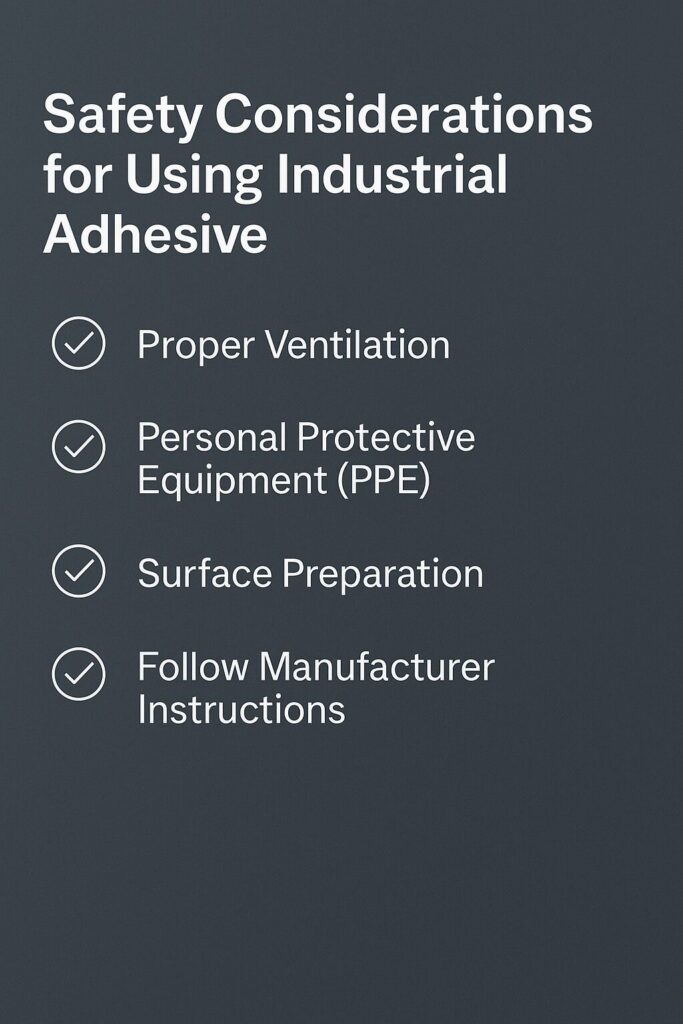
Safety Considerations for Using Industrial Adhesive at Home
1. Proper Ventilation
Many industrial adhesives release volatile organic compounds (VOCs) or harsh fumes. Always work in a well-ventilated area or outdoors when possible. Use fans or open windows.
2. Personal Protective Equipment (PPE)
Wear nitrile gloves, safety goggles, and in some cases, a respirator mask rated for chemical vapors to avoid skin contact and inhalation risks.
3. Surface Preparation
Industrial adhesives demand clean, dry, and sometimes abraded surfaces for optimal bonding. Skipping this step reduces bond quality and increases risks of adhesive failure.
4. Follow Manufacturer Instructions
Industrial adhesives often require:
- Specific mixing ratios (for two-part epoxies)
- Temperature ranges for curing
- Clamp times for achieving full strength
Deviating can result in bond failure or safety hazards.
5. Avoid Certain Materials Indoors
Adhesives containing solvents like toluene or isocyanates can be dangerous indoors without proper exhaust. Choose low-VOC industrial adhesives designed for residential or indoor-safe use when possible.
When Not to Use Industrial Adhesives for Home Repairs
- Child-accessible areas: Due to chemical exposure risks.
- Flexible or fabric repairs: Many industrial adhesives are rigid and may crack under movement.
- Food-contact surfaces: Unless rated food-safe, industrial adhesives should never be used on surfaces like kitchen countertops or cutting boards.
For these, household-grade, FDA-approved, or low-VOC adhesives are safer alternatives.
Best Types of Industrial Adhesives for Home Use
- Two-Part Epoxy Adhesives: Ideal for structural wood, metal, and ceramic repairs.
- Polyurethane Construction Adhesives: Great for subfloors, tiles, and outdoor use.
- Low-VOC Contact Cement: Suitable for cabinetry and laminate repairs.
Look for non-toxic certifications like Greenguard or LEED compliance if safety is a primary concern.
Conclusion
You can safely use industrial adhesive for household repairs if you take the right precautions — proper ventilation, PPE, and adherence to application guidelines are essential. While industrial adhesives offer superior strength, they come with increased chemical risks compared to household glues.
Choose the right adhesive for your project needs, and prioritize health and safety for the best, longest-lasting results.
FAQ
Is industrial adhesive safe for home repairs?
Yes, if proper safety measures like ventilation and PPE are used, industrial adhesive can be safe for home repairs.
Can you use epoxy glue indoors
Yes, but ensure it’s a low-VOC formula and work in a well-ventilated space to avoid inhaling harmful fumes.
What are the risks of using industrial glue at home?
Risks include toxic fumes, skin irritation, and improper curing if safety guidelines are ignored.
Is industrial adhesive stronger than regular glue?
Yes, industrial adhesives offer much higher bond strength and durability compared to regular household glue.
Can industrial adhesives be used on wood furniture?
Yes, two-part epoxies and polyurethane adhesives are excellent for repairing or reinforcing wood furniture.